
Leave Your Message
Engineered Microcrystalline Cellulose Functional Series for specific beverage matrices.
In the highly competitive landscape of the global beverage industry, maintaining the perfect texture, stability, and mouthfeel of neutral dairy beverages (typically characterized by a pH range of 6.5 to 7.0) poses a significant technical challenge. Enter Microcrystalline Cellulose (MCC), a naturally derived, highly purified, partially depolymerized cellulose that acts as a revolutionary texturizing and stabilizing agent. For neutral dairy beverages, achieving long-term shelf stability without compromising the delicate sensory profile is paramount. MCC provides an elegant solution by establishing a robust, three-dimensional insoluble network that effortlessly suspends heavy particles—such as cocoa powder, calcium carbonates, and insoluble proteins—while preventing the undesirable phenomena of phase separation, whey syneresis, and sedimentation over extended storage periods.
The commercial and industrial status of Microcrystalline Cellulose for neutral dairy beverages has witnessed exponential growth over the past decade. Globally, dairy manufacturers are shifting away from synthetic additives, leaning heavily into clean-label, plant-derived ingredients. MCC, recognized globally as safe (GRAS) by the FDA and approved by the EFSA, aligns perfectly with this industry-wide pivot. In industrial applications, the cost-efficiency of MCC is unparalleled. Even at remarkably low dosage levels (often between 0.1% and 0.3%), co-processed MCC (typically blended with carboxymethyl cellulose or natural gums to aid dispersion) creates a thixotropic gel network. This means the beverage remains fluid and easy to pump during high-shear processing and filling lines, yet rapidly rebuilds its stabilizing structure once at rest in the carton or bottle. This dynamic rheological property dramatically reduces production downtime and minimizes the need for excessive homogenization pressures, directly translating to energy savings for large-scale dairy plants.
One of the most profound applications of Microcrystalline Cellulose is in Ultra-High Temperature (UHT) processed flavored milks, particularly chocolate milk. Cocoa particles are notoriously dense and prone to rapid sedimentation. Traditional hydrocolloids often impart a slimy or overly viscous mouthfeel in an attempt to hold these particles in suspension. MCC, however, operates differently. By forming a fine, particulate-based micro-network, it physically traps the cocoa particles without significantly increasing the perceived viscosity on the palate. When the consumer drinks the beverage, the shear force of swallowing breaks the network instantly, delivering a clean, refreshing, and creamy mouthfeel that mimics full-fat milk, even in low-fat or skim formulations.
The sports nutrition and meal-replacement sectors have seen a massive surge in high-protein neutral dairy beverages. Formulating with high concentrations of whey, casein, or plant-based proteins often leads to protein aggregation, chalkiness, and age-gelation during shelf life. Microcrystalline Cellulose acts as a physical barrier between protein micelles. By intertwining with the protein structures, MCC prevents them from clumping together under the thermal stress of pasteurization or UHT treatment. This results in a remarkably smooth, grit-free texture that remains stable for months at ambient temperatures.
As the market expands into oat, almond, soy, and macadamia milks, the challenge of creating a "dairy-like" experience is paramount. Plant milks naturally lack the emulsifying properties of milk fat globule membranes and the stabilizing network of casein. Here, MCC is absolutely indispensable. It imparts the opacity, creaminess, and full-bodied texture that consumers expect from traditional dairy, masking the watery consistency inherent to plant-extract bases. Furthermore, in neutral pH plant milks fortified with heavy minerals like calcium and magnesium, MCC ensures these essential nutrients remain evenly distributed throughout the beverage, ensuring consistent nutritional delivery in every sip.
In milk-based RTD coffee and tea, the interaction between milk proteins, tannins, and the slightly acidic nature of coffee extracts can cause severe flocculation and "creaming" (fat separation) at the top of the bottle. Incorporating Microcrystalline Cellulose into these neutral to slightly acidic matrices creates a protective colloidal system. It stabilizes the fat emulsion and prevents the proteins from denaturing and aggregating, ensuring the RTD coffee maintains a visually appealing, homogenous appearance from the production line to the consumer's hands.
To truly appreciate the value of Microcrystalline Cellulose for neutral dairy beverages, one must understand its intricate mechanism of action. Unlike soluble gums that dissolve to thicken a liquid, colloidal MCC consists of millions of insoluble, sub-micron crystalline rods. When activated by high shear (such as during homogenization), these rods disperse and interact with the co-processing agent (like CMC) to form a 3D lattice. This lattice is thixotropic. It possesses a yield stress—meaning a certain amount of force is required to make the liquid flow. Below this yield stress (when the beverage is sitting on a shelf), the network is rigid enough to hold particles in place. Above the yield stress (when shaken or poured), the network breaks down, allowing the beverage to flow freely like water. This unique rheology is the holy grail of beverage formulation.
Looking toward the future, the development trends surrounding MCC are intensely focused on sustainability, clean-label innovation, and nanotechnology. Trend 1: Clean Label Co-processing. While traditional MCC relies on CMC for colloidal dispersion, R&D centers are pioneering the co-processing of MCC with natural, label-friendly hydrocolloids such as citrus fiber, guar gum, or tara gum. This allows brands to declare fully natural ingredient lists without sacrificing stability. Trend 2: Nano-Crystalline Cellulose (NCC). The industry is slowly exploring the potential of scaling down cellulose crystals to the nanometer range. NCC offers exponentially higher surface area, meaning manufacturers could achieve robust stabilization at fractions of current dosage levels, further reducing costs and minimizing any potential sensory impact. Trend 3: Upcycling and Circular Economy. Modern extraction processes are increasingly utilizing agricultural by-products (like oat hulls or bagasse) as raw materials for MCC production, drastically reducing the carbon footprint and aligning with global ESG (Environmental, Social, and Governance) goals. The evolution of Microcrystalline Cellulose is not just about better beverages; it's about smarter, more sustainable food science.
Nanchang Tellcan food Science Co., Ltd (hereinafter referred to as Tellcan Food), founded in 2001, is an excellent practitioner of compound food additives and food essence, specializing in the research and development, production and sales of food additives, and the research and development of food technology and food technology. Various types of compound food additives, edible essence and spices produced by Tellcan Food can be used in many fields such as food, beverage and dairy products.


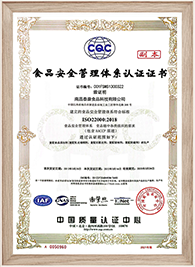
The company has implemented and maintains the HACCP 22000 Food Safety Management System, ensuring reliable products and services. To date, Tellcan has resolved technical challenges for thousands of domestic enterprises and earned prestigious recognitions.
 Council Member of China Food Additives Production and Application Industry Association Standing Council Member of Jiangxi Food Additives Association Member of China Dairy Products Industry Association Member of China Bakery & Confectionery Supplementary Materials Industry Association Member of China National Federation of Industry & Commerce Bakery Association Premium Products & Global Sourcing



Collaborating with industry leaders to advance dairy beverage technology.


Comprehensive Microcrystalline Cellulose formulations tailored for every beverage challenge.
